Mar 25, 2026
Building Better Soils with Biochar: A Global Collaboration in Action
What if improving soil fertility, increasing crop yields, and building resilience to climate change could be achieved using low-cost, locally accessible inputs? This question is at the heart of a recent international collaboration led by Climate Spheres.
In partnership with collaborators from Brazil and Nigeria, Climate Spheres was awarded a travel grant to support a knowledge and research exchange focused on advancing climate-smart agricultural practices in Nigeria. Funded by the U.K.’s Foreign, Commonwealth and Development Office and delivered by Innovate UK, the initiative centered on optimizing biochar production and application methods—and understanding their potential to improve outcomes for smallholder farmers in Nigeria.
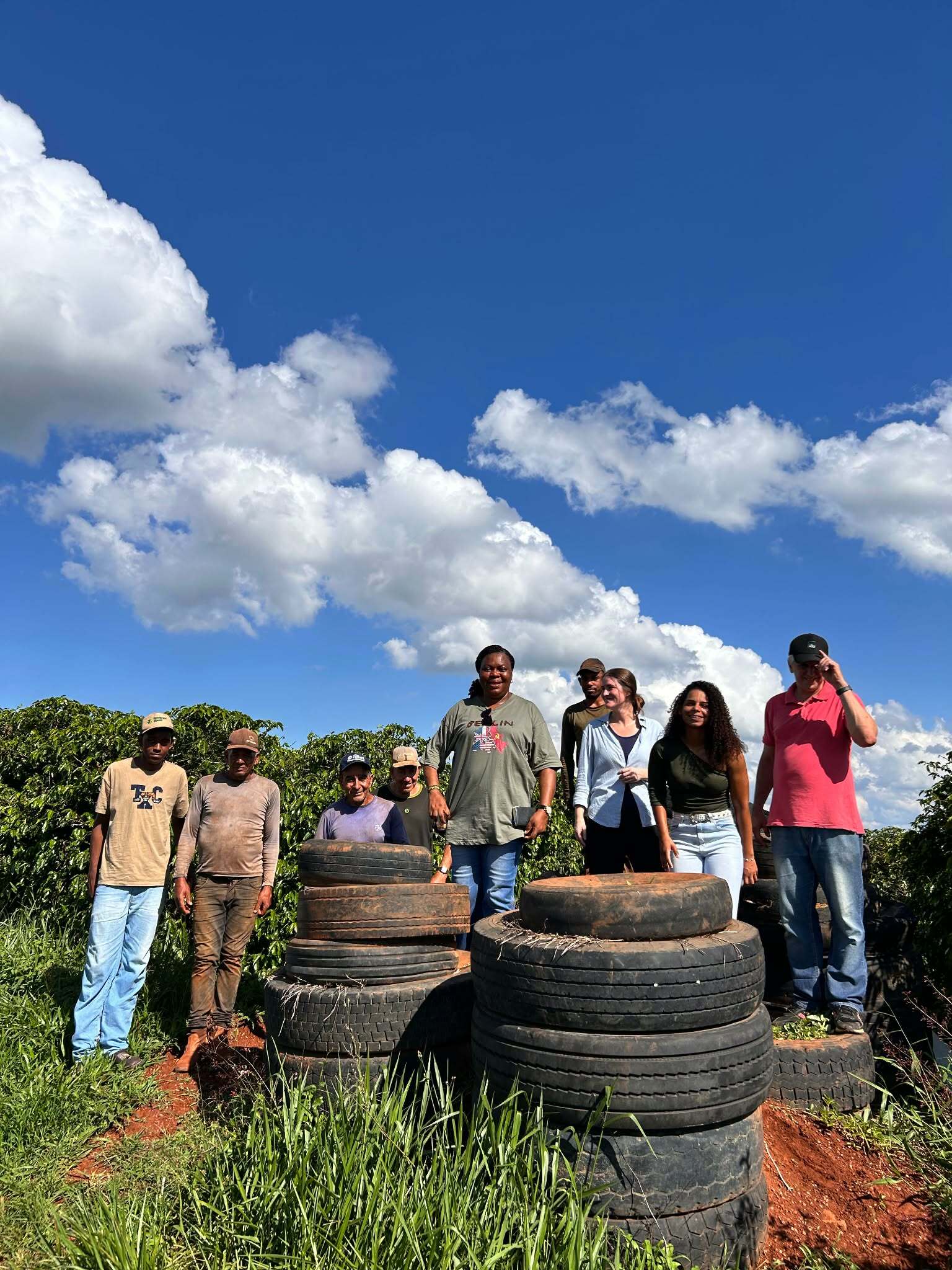
The exchange took place in December 2025 in Lavras, Brazil, bringing together experts and practitioners from Nigeria, Brazil, and the U.K. Dr. Rosalind Haskins represented Climate Spheres, joining Professor Leônidas Melo of the Federal University of Lavras (UFLA), a leading expert in soil fertility and biochar applications, and Professor Mabel Ifeoma Onwuka, a soil scientist at Michael Okpara University of Agriculture in Nigeria.
Hosted by Professor Melo, the visit offered a valuable opportunity to engage directly with ongoing research at UFLA and nearby field sites. Participants connected with local scientists and explored practical, scalable approaches to biochar production and use—particularly those well suited to smallholder farming systems in Nigeria.
The research shared during the visit highlighted compelling results: biochar applications were shown to improve crop yields while also increasing resilience to climate-related stresses, including drought. Importantly, using a combined biological approach showed potential for delivering strong benefits for Nigerian farmers unable to access or afford artificial fertilisers - that can be achieved with affordable inputs, minimal training, and limited energy access.
Beyond its applications in Nigeria, the exchange also opened new avenues for innovation. Climate Spheres is continuing to explore research introduced during the visit, including the use of biochar to reduce odors in composting systems, with potential relevance for farmers, processors, and producers in the U.K. More broadly, the development of highly affordable and low-tech agricultural inputs is helping to spark new ideas for research and practical implementation.
This collaboration strengthens Climate Spheres’ ability—alongside Professor Melo and Professor Onwuka—to support a wide range of biochar initiatives both locally and globally.
To learn more about how optimized biochar production and application methods could support your work, please get in touch via our Contact Us page.
Authored by: Kathleen Nielsen, Climate Spheres LinkedIn: linkedin.com/in/kathleennielsen/